Medicine guide
Use the symptom table to choose which health-panel problem to inspect, then compare the injury reference for the treatment category. The values describe in-game mechanics. Each detailed treatment has one community-wiki editorial source, with direct references below.
Injury and condition reference
| Condition | Causes | What to inspect | Treatment category | Risk / complications | Status |
|---|---|---|---|---|---|
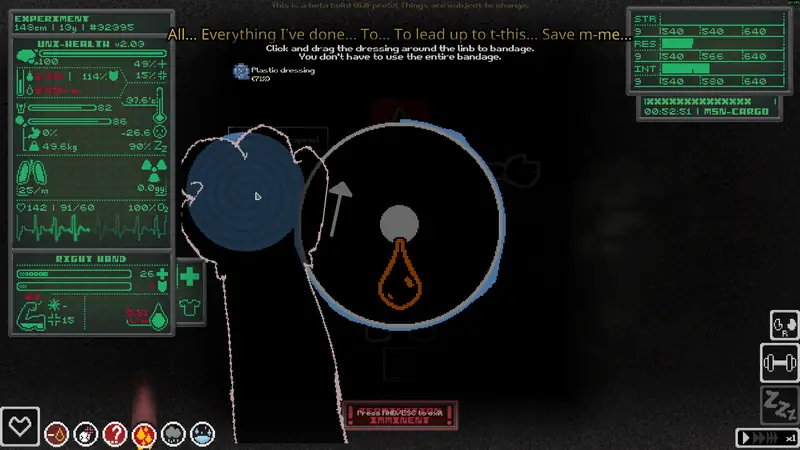
| External bleeding | Wounds, bites, traps or other limb damage | Blood-drop indicator on the affected limb | Dressings; sutures or wound glue for major wounds; tourniquet buys time | Ongoing blood loss can threaten survival | 1 source · community wiki |
| Internal bleeding | Torso trauma and other listed causes | Blood loss without a matching external wound; possible vomiting blood | Procoagulant or L.R.D.-type treatment; chest drain addresses hemothorax rather than the cause | Blood loss and hemothorax can become lethal | 1 source · community wiki |
| Dislocation / fracture | Severe impact | Pain and impaired limb function | Inspect the affected limb; relocation minigame for dislocations, splint / relevant repair item for fractures | Impaired movement and ability to treat other injuries | 1 source · community wiki |
| Limb infection | Wound infection / poor hygiene | Infection icon and rising progression; earlier limb complaint may precede icon | Disinfect the limb; monitor immunity and progression; antibiotics have different effects | Uncontrolled infection can progress to sepsis | 1 source · community wiki |
| Brain Damage | Head impact, low blood oxygen (SpO2 below 80), failed shrapnel removal from the head | Brain damage moodles 1–4; six periodic effects including attack hallucinations, speech loss, consciousness loss | Braingrow (+10 over 100 s), neural booster (+10 first use), mindwipe (+50, capped at 96) | Fibrillation, stroke, coma, death | 1 source · community wiki |
| Stroke | Systolic blood pressure above 180 (2%/s), eating a browncap (0.4%) | Slurred speech above 20, flashing health panel above 50, forced fibrillation above 90 | Braingrow (−1.5/s for 100 s), procoagulant (−10/s), neural booster, mindwipe, last stand | Fibrillation, cardiac arrest, permanent brain damage | 1 source · community wiki |
| Heart Failure (Cardiac Arrest) | Fibrillation reaching 100, or heart rate dropping below 20 bpm | No pulse, blood pressure collapses to 0/0, consciousness falls fast | Epinephrine (6 attempts per mL at 5% each) or a defibrillator (80% failure per shock) | Brain death within minutes | 1 source · community wiki |
Symptom to next step
| You see | Likely problem | Next step named on the wiki | Status |
|---|---|---|---|
| Blood drop on one limb | External bleeding | Select that limb; apply a suitable dressing and check blood loss again. | 1 source · community wiki |
| Blood loss without an external wound | Internal bleeding | Inspect torso and internal bleeding; procoagulant / L.R.D. treat bleeding, chest drain treats resulting hemothorax. | 1 source · community wiki |
| Slurred speech or flashing health panel | Stroke | Inspect blood pressure and stroke progression; use the linked condition page to compare treatments. | 1 source · community wiki |
| No pulse / collapsed blood pressure | Heart failure | Inspect arrest; epinephrine or a defibrillator is documented, with separate device instructions. | 1 source · community wiki |
| Head impact / low blood oxygen | Brain damage | Inspect brain health and oxygen; address the cause as well as the brain-health loss. | 1 source · community wiki |
| A limb hurts, feels weird or fails to heal | Possible hidden infection | Inspect limb and infection progression; disinfect. Ceftriaxone affects immunity but is not a direct disinfectant or sepsis cure. | 1 source · community wiki |
| Rising opiate load after pain treatment | Opioid burden | Stop treating it as ordinary pain; compare naloxone and the specific opiate item. | 1 source · community wiki |
| Severe limb pain after impact | Dislocation / fracture | Inspect the selected bone before choosing relocation, splint or a bone-repair item. | 1 source · community wiki |
Internal bleeding
Scale 0–100. The cap listed is 0.21375 L/m, and at full satiety the practical cap is 0.16 L/m. A moodle appears at 5 or above. Each point is 0.00855 L/m of total bleed. Vomiting interval is given as 15 divided by (internal bleeding times 0.01) seconds. Above 5, it converts toward hemothorax. Causes listed include fractures, torso impacts, a ruined abdomen, the hard stimulant, a sound-cannon hit, radiation sickness, spikes, turrets, explosions, and a second neural booster.
Stroke and the heart
Stroke can start when systolic pressure is over 180, with a 2 percent chance per second in the notes, or from browncap. Speech slurs over 20, the panel flashes over 50, and fibrillation is forced over 90. Cardiac arrest is fibrillation at 100 or a heart rate under 20. Without an auto-pump, pressure falls off. The only treatments named are epinephrine and the two defibrillators.
Opioid overdose
Fentanyl is the sharp one: about 0.25 mL matches one +10 opiate dose, and 100 mL drunk is listed as lethal even with naloxone. Naloxone removes about 4 opiate per 1 mL, applied at about 8 per second. Opium is the weak craftable cousin. I am linking the items rather than repeating every millilitre here.
Questions
Is this real medical advice?
No. Every number is an in-game value from the community wiki. It is not a dose for a person.
Related guides
Sources
| Source | Checked |
|---|---|
| Miraheze wiki | 2026-11-12 |
| Steam store page | 2026-11-12 |
| Miraheze — First-Aid Guide | 2026-11-12 |
| Miraheze — Bleeding | 2026-11-12 |
| Miraheze — Infection | 2026-11-12 |